Bigger Isn't Always Better
A huge pan looks versatile until you're trying to fry one egg in it.
A tiny saucepan is convenient until you're cooking pasta for four.
Choosing the right cookware sizes comes down to household size, portion size, storage space, and the meals you prepare most often.
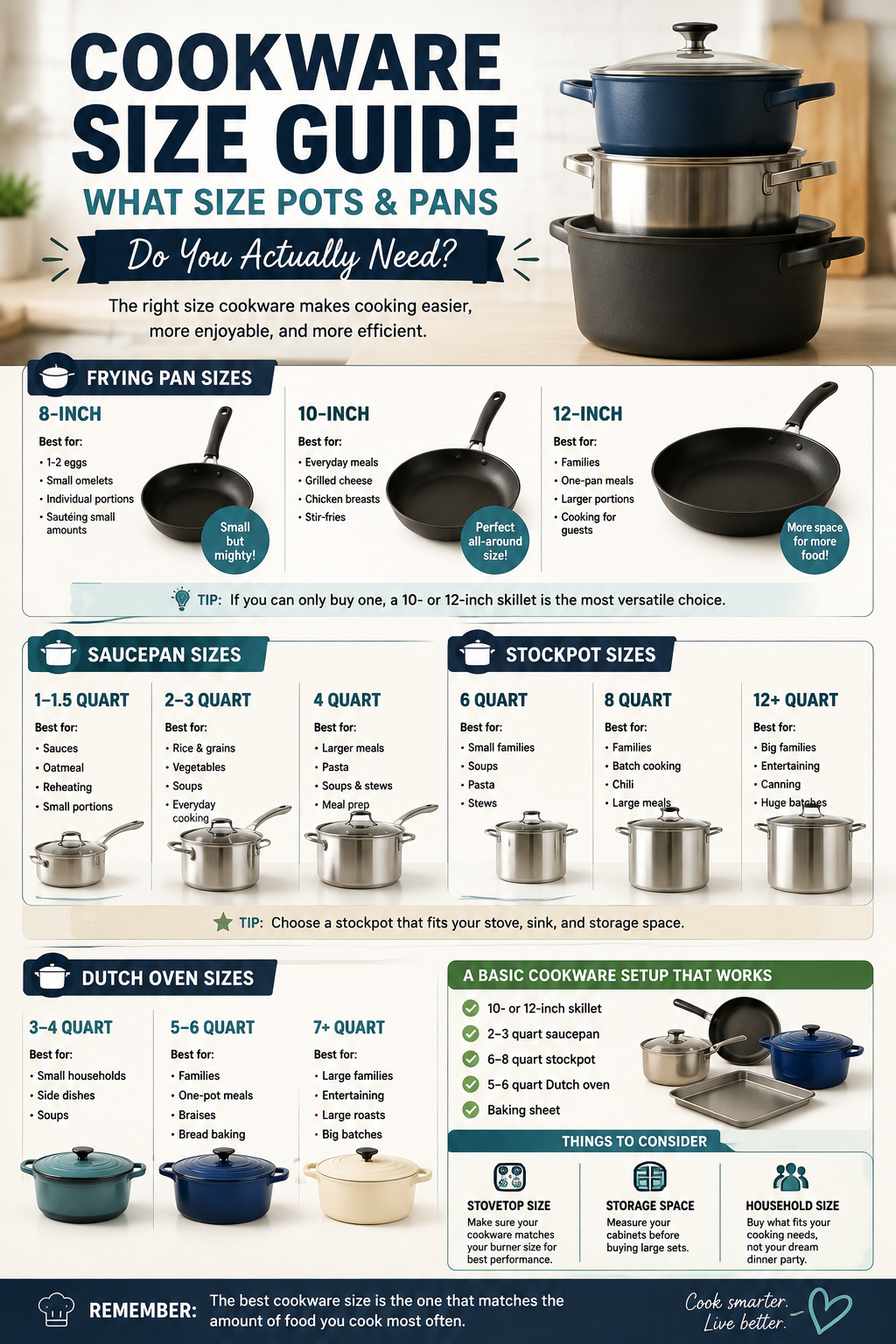
Frying Pan Sizes
8-Inch Frying Pan
Best suited to smaller portions.
Useful for:
- One or two eggs
- Small omelets
- Individual portions
- Toasting spices or nuts
- Small side dishes
It's convenient, but probably too small to serve as your only frying pan.
10-Inch Frying Pan
This is an excellent everyday size for many kitchens.
It's large enough for many common meals without being cumbersome.
12-Inch Frying Pan
A 12-inch skillet provides considerably more cooking surface and is useful for families, larger portions, and one-pan meals.
If you're buying only one: A 10- or 12-inch skillet is generally more versatile than an 8-inch model.
Saucepan Sizes
1–1.5 Quart
Useful for:
- Small sauces
- Butter
- Oatmeal
- Small portions
- Reheating
2–3 Quart
This is the everyday sweet spot for many households.
Use it for rice, vegetables, soups, sauces, grains and smaller batches of pasta.
4 Quart
Better when cooking larger portions or regularly preparing meals for several people.
Stockpot Sizes
6 Quart
A practical option for many everyday households.
8 Quart
Provides more room for:
- Pasta
- Soup
- Chili
- Stock
- Batch cooking
12+ Quart
More appropriate for large batches, entertaining, canning where appropriate, or households that routinely cook significant quantities.
Don't buy an enormous stockpot simply because it seems more versatile. It also has to fit your cabinets, sink and stovetop.
Dutch Oven Sizes
3–4 Quart
Good for smaller households and side dishes.
5–6 Quart
A versatile range for many families.
This size can handle soups, stews, braises, bread and many one-pot meals.
7+ Quart
Better for larger households, entertaining and batch cooking.
What Does a Typical Home Cook Actually Need?
You can build a very capable cookware collection around:
- 10- or 12-inch skillet
- 2- to 3-quart saucepan
- 6- to 8-quart stockpot
- 5- to 6-quart Dutch oven
- Baking sheet
You don't necessarily need every size manufacturers produce.
Once you know which sizes fit your household and cooking style, explore our Cookware: Pots, Pans & Sets to find options for your kitchen.
Setting up your first kitchen? Our Ultimate First Apartment Kitchen Checklist goes beyond cookware and covers the food-prep tools, utensils, appliances, storage, and cleaning essentials you'll want to consider.
Consider Your Stovetop
Before purchasing large cookware, check the size and configuration of your burners.
An oversized pan on a small heating element may not perform the way you expect.
Induction users should also verify that cookware is compatible with their cooktop.
Consider Storage
A 12-piece cookware collection isn't a bargain if half of it doesn't fit in your cabinets.
Measure available storage before purchasing larger sets, particularly if you're working with an apartment or small kitchen.
Final Thoughts
The best cookware size is the one that matches the amount of food you normally prepare.
Don't buy for the imaginary dinner party you might host three years from now.
Buy for Tuesday night.
And when a recipe has you reaching for the calculator, keep our Kitchen Measurement & Conversion Chart handy for quick cooking, baking, metric, and oven-temperature conversions.
And if you're building out the rest of your cooking setup, our Kitchen Tools & Gadgets collection has practical tools for food preparation and everyday cooking.
You can always add specialty sizes as your cooking needs change.
