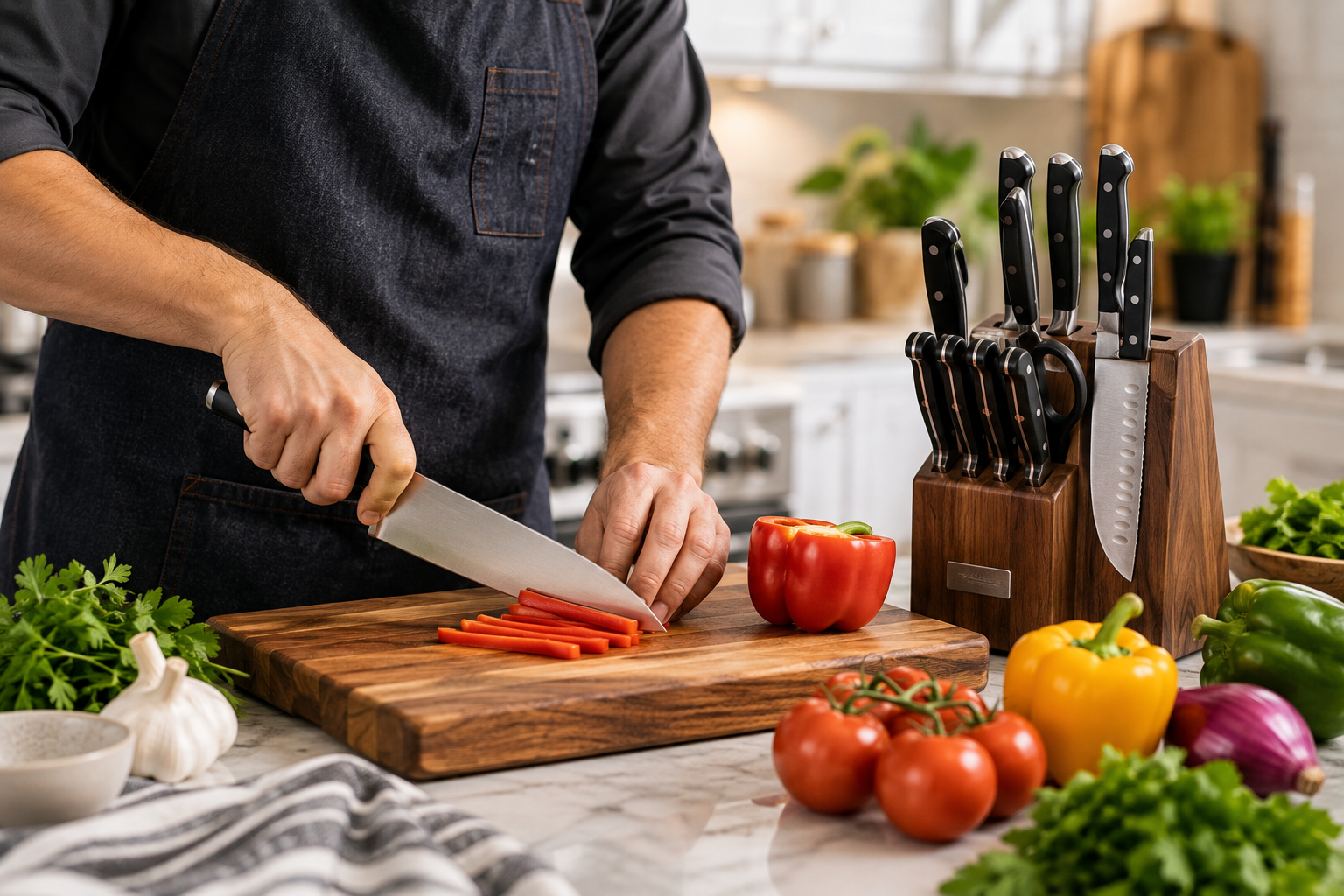
You Probably Don't Need a Huge Knife Set
You've seen them: massive knife blocks containing 15, 18, or even 20 different knives.
They look impressive.
But how many will you actually use?
For most home cooks, choosing the best kitchen knives isn't about finding the biggest set. It's about owning several dependable knives that feel comfortable and handle the majority of your food preparation.
Here's what you should know before buying.
The Chef's Knife: Your Everyday Workhorse
If you invest in only one high-quality kitchen knife, make it a chef's knife.
A chef's knife can handle chopping vegetables, slicing meat, mincing herbs, dicing onions, crushing garlic, and dozens of other everyday tasks.
An 8-inch chef's knife is a popular all-purpose size, although comfort should ultimately determine what's right for you.
Santoku Knife
A santoku is another versatile option.
Generally shorter and lighter than many traditional chef's knives, santoku knives are excellent for slicing, dicing, and chopping.
Some home cooks simply prefer the feel and cutting motion of a santoku.
Paring Knife
When your chef's knife feels too large, reach for a paring knife.
These compact knives are useful for peeling produce, trimming fruits and vegetables, removing stems, and performing detailed preparation work.
Serrated Bread Knife
Bread knives aren't only for bread.
The serrated blade works well on foods with firm exteriors and softer interiors.
That includes crusty bread, rolls, cakes, and even tomatoes.
Utility Knife
A utility knife sits somewhere between a chef's knife and a paring knife.
It's useful for smaller slicing jobs, sandwiches, fruit, vegetables, and situations where a full-sized chef's knife feels excessive.
Should You Buy Individual Knives or a Knife Set?
This depends on your cooking habits.
A thoughtfully selected knife set can be convenient, particularly when you're starting from scratch.
However, buying individual knives lets you spend your money on the blades you'll actually use.
For many home cooks, a chef's knife, paring knife, and serrated bread knife can handle most kitchen tasks.
What Makes a Good Kitchen Knife?
Don't judge a knife by appearance alone.
Pay attention to:
Comfort: The handle should feel secure and natural in your hand.
Balance: A well-balanced knife is generally easier to control.
Blade quality: Look for materials designed to maintain a useful edge while offering reasonable durability.
Size: Bigger isn't automatically better. Choose something you can comfortably control.
Maintenance: Consider how much sharpening and care you're willing to perform.
Don't Forget Knife Storage
Even excellent knives can become damaged when they're tossed loosely into a kitchen drawer.
A knife block, magnetic storage system, in-drawer organizer, or individual blade guards can help protect both the blades and your hands.
Keep Your Knives Sharp
A dull knife makes food preparation frustrating and can require excessive force.
Regular honing and periodic sharpening can help maintain performance.
Always follow the manufacturer's care recommendations, particularly for specialty blade materials.
Final Thoughts
Choosing the best kitchen knives isn't about having a blade for every imaginable situation.
Start with a few versatile knives that feel comfortable in your hand and match the foods you prepare most frequently.
Three excellent knives that you use every day are far more valuable than 15 that rarely leave the block.
CTA: Looking to improve your food-prep setup? Browse kitchen knives, cutting boards, storage solutions, and other food-preparation essentials at Every Kitchen Need.
