An organized pantry isn't about having perfectly matching containers or creating a space that looks like it belongs in a magazine.
It's about being able to find what you need, see what you already have, reduce wasted food, and make everyday cooking easier.
If your pantry has become crowded with half-used packages, duplicate ingredients, forgotten cans, and items you can't find when you need them, you don't necessarily need a bigger pantry.
You may simply need a better system.
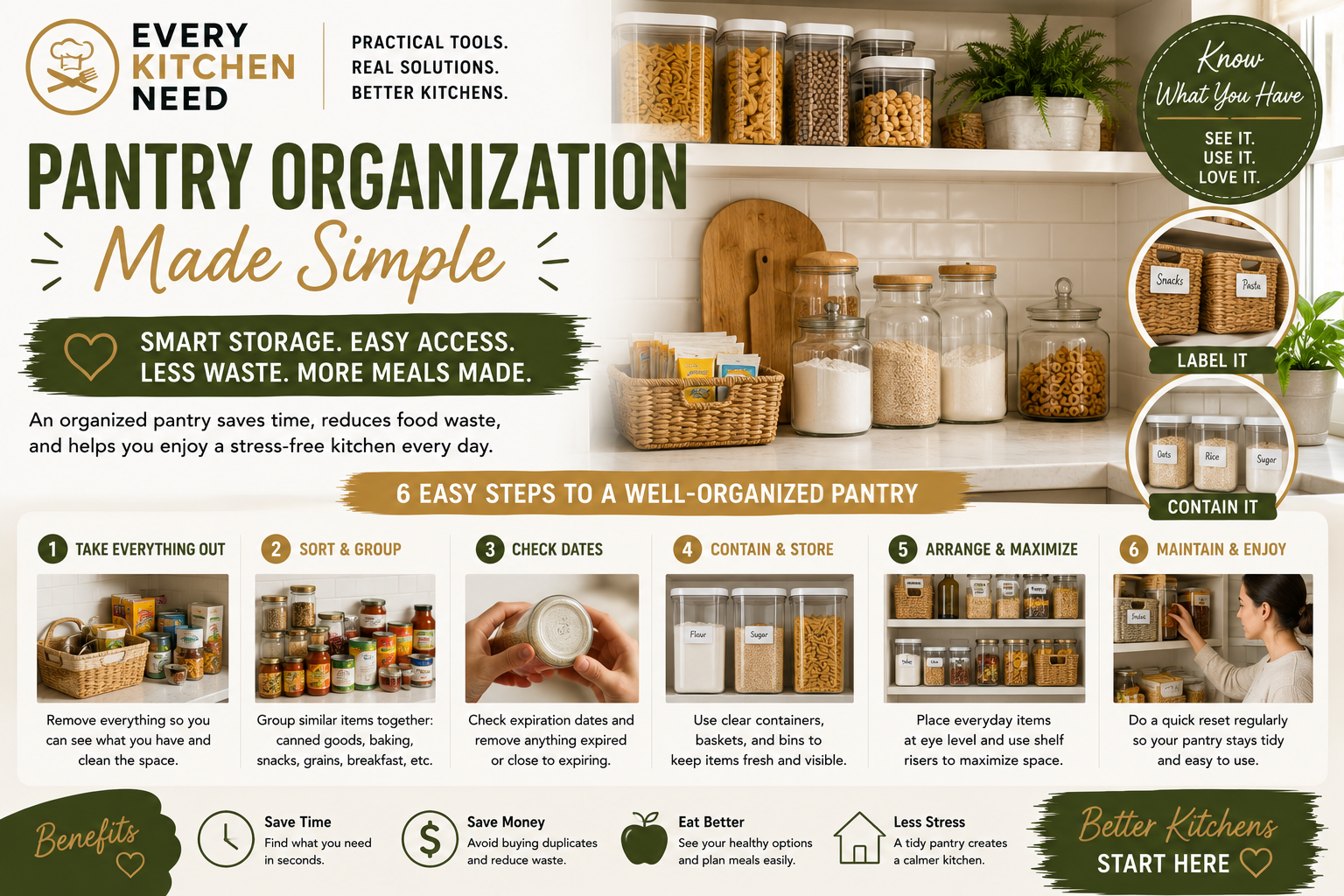
Here's how to organize your pantry in six practical steps.
1. Take Everything Out
The easiest way to understand what's hiding in your pantry is to empty it.
Remove food, containers, baskets, small appliances, and anything else stored there.
This gives you an opportunity to clean the shelves and see exactly how much usable space you have.
Don't worry if your kitchen temporarily looks worse.
You're creating a clean starting point.
If limited storage is a larger problem throughout your kitchen, our How to Organize a Small Kitchen: 15 Space-Saving Ideas That Actually Work guide has additional ideas for cabinets, drawers, countertops, and other tight spaces.
2. Sort Similar Foods Together
Before putting anything back, group similar items.
Useful pantry categories might include:
- Pasta and grains
- Canned foods
- Baking ingredients
- Breakfast foods
- Snacks
- Sauces and condiments
- Beverages
- Spices and seasonings
- Backstock and extras
There's no universal pantry system.
Create categories based on what your household actually buys and eats.
Someone who bakes every weekend may need a large baking section. Another household may need more room for snacks or quick weeknight ingredients.
3. Check Dates and Food Condition
As you sort, inspect what you have.
Check package dates, storage instructions, seals, and the condition of the food. Follow applicable food-safety guidance when deciding whether something should be kept or discarded.
Also look for duplicates.
You may discover three unopened packages of an ingredient simply because nobody could see the first two.
This is one of the biggest advantages of pantry organization:
When you know what you have, you're less likely to buy it again unnecessarily.
4. Use Containers and Bins Strategically
You don't need to transfer every grocery item into a matching container.
Containers should solve a problem.
Clear containers can be helpful for frequently used dry foods because they make quantities easy to see. Baskets and bins can group smaller packages that would otherwise become scattered across a shelf.
They can be especially useful for:
- Snack packets
- Baking supplies
- Breakfast items
- Pasta
- Rice and grains
- Small packaged foods
Browse Kitchen Storage & Organization for storage solutions that can help make pantry shelves, cabinets, and other kitchen spaces easier to manage.
5. Put Everyday Foods Where They're Easy to Reach
Not every pantry shelf is equally convenient.
Use your easiest-to-reach areas for ingredients you use most frequently.
Everyday foods can go around eye level, while less frequently used items can occupy higher or lower shelves.
If children need independent access to certain snacks, you may choose an appropriate lower location for those foods.
Heavy items should generally be stored where they can be retrieved safely.
The principle is simple:
Make the things you use most often the easiest things to reach.
6. Use Shelf Height More Efficiently
Pantry shelves often have significant unused vertical space.
Shelf risers, stackable containers, baskets, and appropriately sized organizers can help turn that empty space into usable storage.
But don't pack every inch.
If shelves become so crowded that you have to remove five things to reach one ingredient, the organization system isn't helping.
Leave enough visibility and access to use the pantry comfortably.
Create a Baking Zone
If you bake regularly, grouping your baking ingredients together can save time.
Keep frequently used ingredients such as flour, sugar, baking powder, baking soda, chocolate chips, and decorating supplies in the same general area when practical.
You can explore Bakeware & Baking Supplies when building or improving your baking setup.
And when a recipe calls for an unfamiliar measurement, our Kitchen Measurement & Conversion Chart provides a convenient reference for common kitchen conversions.
Keep Cooking Ingredients Near One Another
The same principle applies to everyday cooking.
If you frequently prepare pasta, keeping pasta, sauces, and related shelf-stable ingredients in the same area can make meal preparation easier.
Likewise, breakfast foods can share a zone, as can canned ingredients or frequently used seasonings.
You're essentially organizing your pantry around how you cook instead of how the grocery store organizes its shelves.
Don't Forget Labels
Labels can be useful, particularly when several household members use the pantry.
They can identify broad areas such as:
Snacks • Baking • Pasta • Breakfast • Canned Foods
But labeling every single item isn't necessary.
Use labels where they make the system easier to understand and maintain.
The best organization system is one your household can follow without needing instructions.
Use the First-In, First-Out Principle
When adding new groceries, avoid automatically placing them in front of older products.
When appropriate, move older items toward the front and place newer ones behind them.
That encourages you to use existing food before opening newer packages.
This simple habit can help reduce forgotten food and unnecessary waste.
Create a Small Backstock Area
Buying extras can be convenient, especially for foods your household uses regularly.
The problem begins when those extras become mixed with everyday items.
If space allows, designate one area for backstock.
When the everyday package runs out, replace it from your backstock before adding the item to your shopping list.
That makes it easier to know whether you actually need more.
Avoid Overbuying Organizers
This is important.
Don't buy fifteen storage containers before you've organized the food.
First:
Empty → Sort → Measure → Identify the problem → Then buy the solution.
Otherwise, you may end up trying to organize your organizers.
Your pantry should determine which storage products you need—not the other way around.
Maintain Your Pantry With a Quick Reset
The best pantry system isn't the one that looks perfect immediately after you organize it.
It's the one that still works three months later.
Every week or two, take a few minutes to:
- Return misplaced foods
- Check what's running low
- Move older foods forward
- Remove empty packaging
- Wipe obvious spills
- Add needed items to your shopping list
A five-minute reset is much easier than completely reorganizing the pantry every few months.
Pantry Organization Can Save More Than Space
A functional pantry can help you see ingredients before they expire, avoid purchasing duplicates, find what you need faster, and make meal planning easier.
It can even make cooking feel less stressful.
And that's ultimately what good kitchen organization should accomplish.
Not perfection.
Function.
At Every Kitchen Need, we're focused on practical products and everyday solutions that help make cooking, storing, organizing, and enjoying your kitchen easier.
Know what you have. Find what you need. Make your kitchen work for you.
